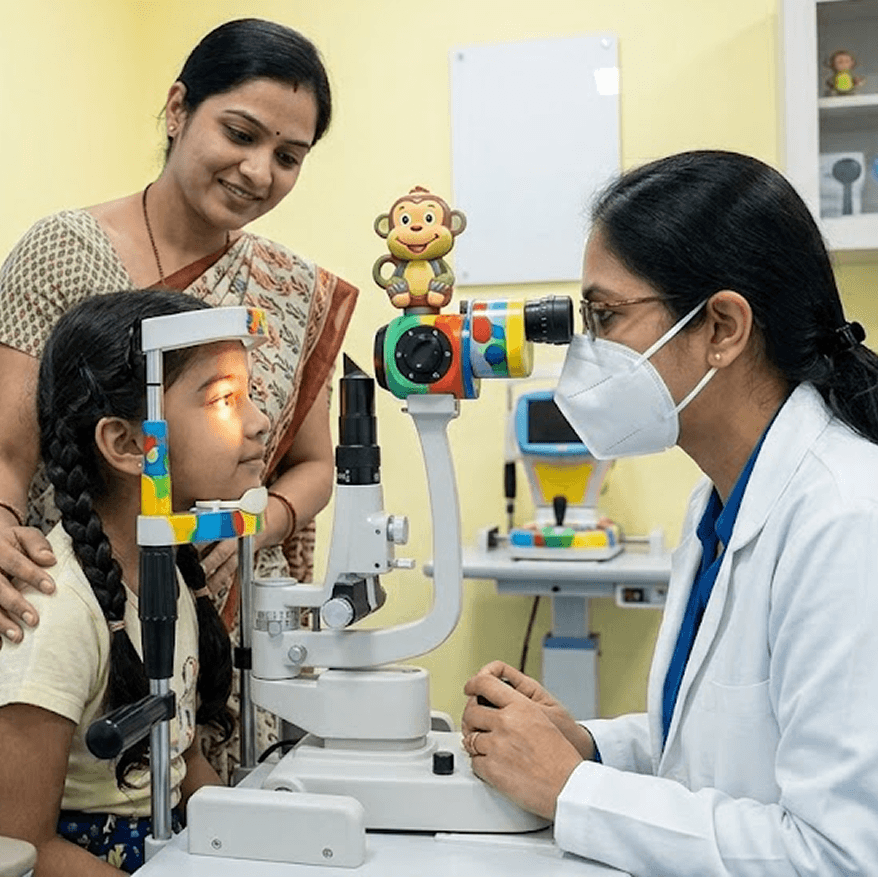






Pediatric Ophthalmology
Eye care for babies, children and teenagers, from vision screening to squint and lazy eye treatment.
Surgery at Habsiguda. Branch with a pediatric eye specialist only in Habsiguda currently.
EHS, CGHS and cashless insurance accepted. Aarogyasri does not cover cataract surgery, pedatric cataract is avaiable in aarogyasri.
Understanding Your Child's Eyes
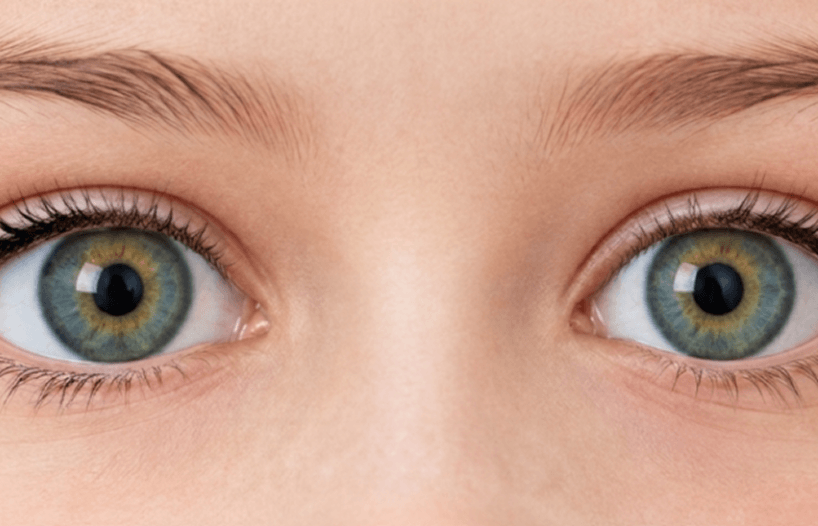
Healthy Eyes
(Aligned)
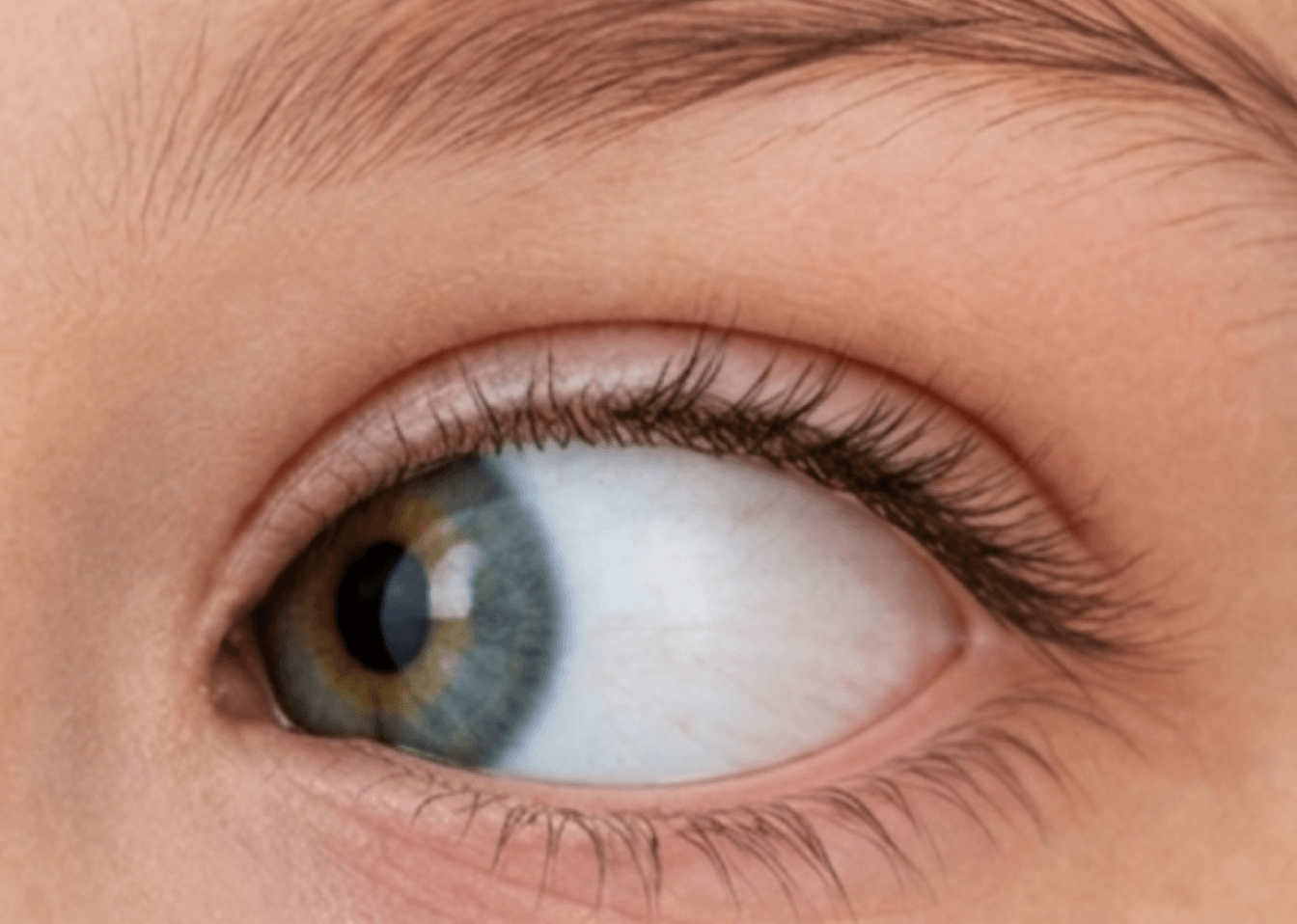
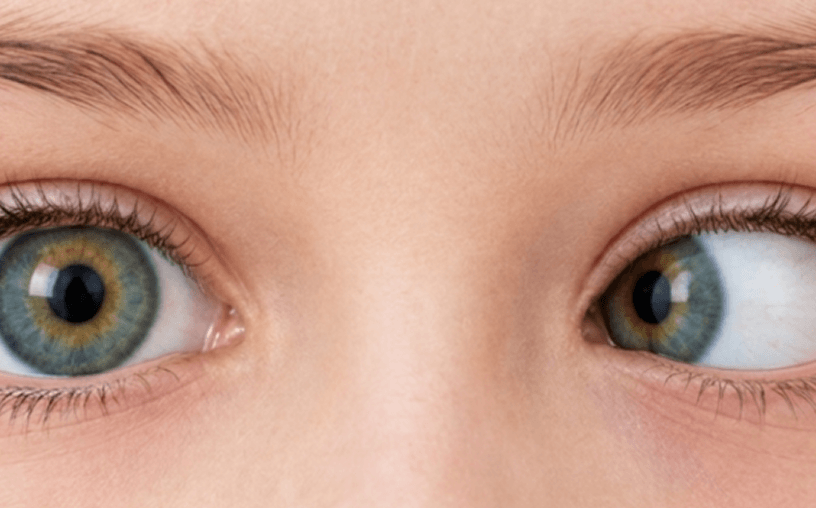
Squint Eyes
(Misaligned)
What happens in a child’s eyes?
- A child’s vision is still developing. Problems found early are easier to treat and can protect vision for life.
- Children rarely complain about their eyesight. They assume everyone sees the way they do, so regular checks matter.
- Sitting very close to the TV or holding books close
- Squinting, closing one eye or tilting the head
- One eye drifting inward or outward
- Frequent eye rubbing, headaches or tired eyes
- Constant watering or light sensitivity
- Difficulty reading the board, or a drop in/poor school performance
- In a baby: not following light or faces by 2 to 3 months (especially mothers face)
Causes: family history; premature birth or low birth weight; conditions present from birth; infections during pregnancy; uncorrected glasses power; eye injury. In many children no single cause is found.
Risk factors: premature birth; family history of squint, lazy eye, glasses or childhood cataract; developmental delay; long hours of near work and screen time with little time outdoors (short sight); earlier eye injury.
- Refractive errors: short sight, long sight and astigmatism
- Amblyopia (lazy eye): reduced vision in a healthy-looking eye because the brain favours the other eye
- Squint (strabismus): the eyes are not aligned
- Childhood cataract: a cloudy lens, from birth or later
- Retinopathy of prematurity (ROP): affects the retina in premature babies
- Blocked tear duct: constant watering in babies
- Congenital glaucoma: raised eye pressure present from birth
- Newborns: a basic eye check after birth. Premature babies need retina (ROP) screening.
- First eye check by age 3, or earlier if you notice a sign
- Early check up for children’s parents with high myopia
- A check before school, then every year if your child wears glasses
- Daily time outdoors helps slow short sight progression
- Screen breaks. For large screens older children, every 20 minutes look 20 feet away for 20 seconds. Mobile limit screen time.
- Protective eyewear for sports. Keep children away from crackers and sharp toys.
- Do not apply kajal or home remedies in a baby’s eyes
See a doctor promptly if a pupil looks white or grey, in person or in photos, or if the eyes stay crossed beyond about 4 months of age.
1. Diagnosis
A child’s eye problem is confirmed with detailed eye examination, kept short and child-friendly. Tests may include:
Age-appropriate Vision Test
Picture charts and fixation tests for young children
Glasses Power Test with Drops
Drops relax the eye’s focusing so the power is measured accurately (mydriatic eye drops)
Alignment Test
Checks whether the eyes are straight
Retina and Eye Pressure Check
Looks at the back of the eye
Dilating drops blur near vision and cause light sensitivity for several hours.
2. Treatment
When is treatment needed?
As early as possible. Lazy eye responds best when treatment starts early, though older children can still improve but tough to treat.
Without surgery:
Glasses, patching, and eye exercises treat most refractive errors, lazy eye and many squints.
Choosing the Approach:
- Glasses: Correct short sight, long sight and astigmatism. The power changes as a child grows, so reviews matter.
- Patching and drops: Cover or blur the stronger eye to train the weaker eye.
- Short-sight control: Low-dose atropine drops, myopia lenses and more outdoor time.
Surgical Options:
Squint surgery: Adjusts the eye muscles to align the eyes. Done under general anaesthesia/ local anaesthesia based on age.
Childhood cataract surgery: Removes the cloudy lens, with a lens implant depending on age, followed by glasses or patching.
Other:
ROP laser or injections, tear duct probing, and surgery for congenital glaucoma.
Got a diagnosis? Ensure you’re on the right track with a second opinion:
3. Recovery and Post-Op Care
- The eye is red and sore for a few days after squint surgery
- Use drops exactly as prescribed
- Keep your child from rubbing the eye
- Keep water out of the eye
- Avoid swimming for about 2 weeks
- Avoid rough play and contact sports until cleared
- After cataract surgery, glasses or patching are part of treatment and must be followed
- Regular reviews continue
- Children need regular reviews, since vision keeps developing.
For Pedatric cataract & Squint surgeries there are different protocols for post operative care. Please consult your treating doctor.
Call us or visit immediately for increasing redness or swelling, discharge, pain, or a sudden change in how your child sees.
Got questions about your recovery?
Planning Your Care
Comprehensive care, personalized for you. Know what is covered, what it costs and what to bring.
Insurance & Schemes
- EHS
- CGHS
- Cashless insurance (Check list)
- Institutional empanelments (Check list)
- Aarogyasri
What will it cost?
Consultation fee:
Surgery:
Depends on the condition and treatment
Before your visit
Bring:
- For a baby, the birth history (premature birth, birth weight, NICU stay)
- Photo ID, Current glasses and Insurance or scheme card
- A favourite toy or a snack
Plan for: 2-3 hours, with dilation. Sunglasses help on the way home
Unsure where to start? We’re here to help!
Frequently Asked Questions
When should my child's eyes first be checked?
Newborns get a basic check after birth. Have a full eye check by age 3, or earlier if you notice a sign. After that, every 6 months if your child wears glasses.
My child never complains. Does he or she still need a check?
Yes. Children assume everyone sees as they do. Squinting, sitting close to the TV and headaches are signs.
Will glasses make the eyes weaker?
No. Glasses give clear vision. The power changes as the child grows.
What is a lazy eye?
Reduced vision in a healthy-looking eye, because the brain favours the other eye. Early treatment works best.
Can a squint be treated later in life?
Yes, but earlier treatment is better for vision. Later life only cosmetic purpose can be solved not vision/ 3D Vision.
Is squint surgery safe?
Does a premature baby need an eye check?
Yes. Premature babies need retina screening for ROP in the first weeks.
Worried about your child's eyes?
Book a pediatric eye consultation at Habsiguda.