




Glaucoma
Detection and lifelong care for a condition that damages the optic nerve, often without early symptoms.
*Monday to Saturday, 9 am to 8 pm | Consultations from 8:45 am
Habsiguda and Chanda Nagar. Laser and surgery at Habsiguda.
EHS, CGHS and cashless insurance accepted. Aarogyasri does not cover glaucoma surgery.
Eye drops for most people. Laser or surgery when needed. Care is long-term, with regular follow-up.
Understanding Glaucoma
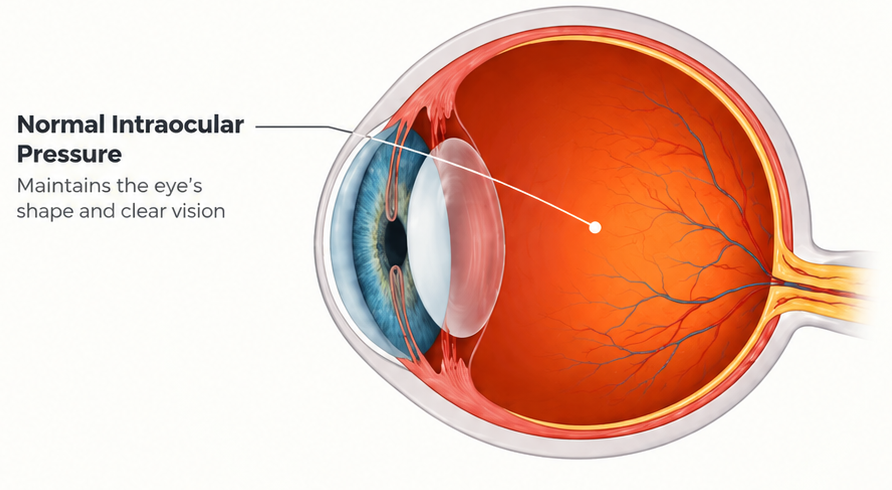
Healthy Eye
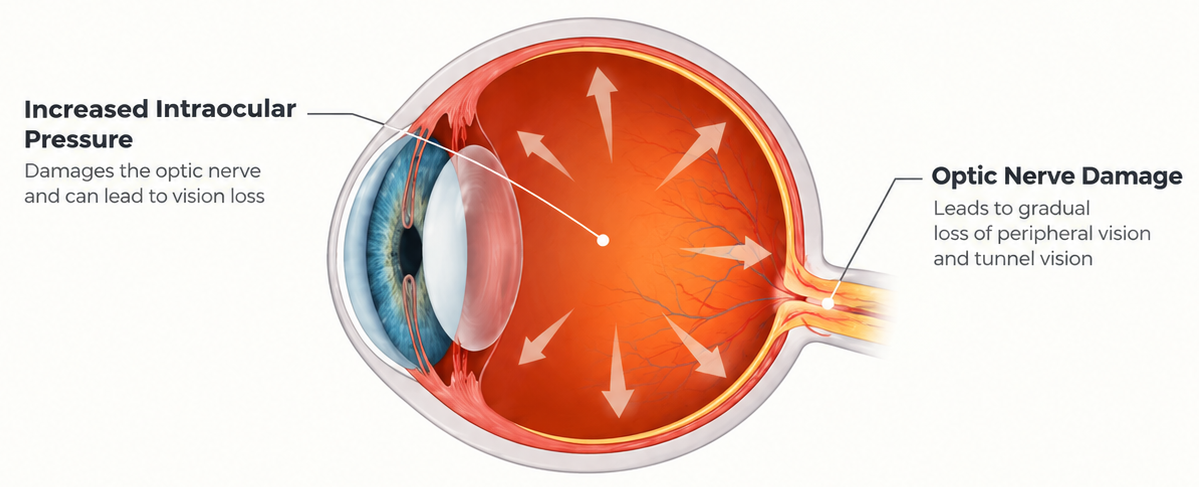
Glaucoma
What happens in glaucoma?
- Glaucoma damages the optic nerve, which carries images from the eye to the brain. It is usually linked to raised pressure inside the eye.
- The damage is gradual and permanent. Treatment protects the vision you have. It cannot bring back vision already lost.
- Early glaucoma usually causes no symptoms, so regular eye examinations are how it is found.
- Usually none in early glaucoma
- Side vision shrinks slowly and is often noticed late
- Bumping into things
- Vision narrowing like a tunnel
- Severe eye pain and headache
- A red eye
- Blurred vision and halos around lights
- Nausea and vomiting
Causes: poor drainage of eye fluid, which raises pressure; a narrow drainage angle; steroid use; eye injury; eye inflammation; diabetes; genetics; reduced blood supply to the optic nerve.
Risk factors: age above 40; family history of glaucoma; high eye pressure; thin cornea; high myopia or long sight; diabetes and high blood pressure; long-term steroid use; earlier eye injury or eye surgery.
- Primary open-angle: the most common type. Develops slowly and painlessly.
- Angle-closure: the drainage angle is blocked. It can build slowly, or cause a sudden attack.
- Normal-tension: optic nerve damage even though eye pressure is in the normal range
- Secondary: caused by another condition, such as steroid use, injury, inflammation, diabetes or an advanced cataract
- Childhood (congenital): present from birth or early childhood (see Pediatric Ophthalmology)
Glaucoma cannot be prevented, but vision loss can often be prevented by finding it early.
- Get a full eye examination, including eye pressure and the optic nerve, from age 40, every 1 to 2 years or as advised
- Start earlier, and check more often, with a family history, diabetes, high myopia or steroid use
- Use steroid medicines and drops only as prescribed
- Keep blood pressure and diabetes under control
- Wear protective eyewear to prevent injury
- Ask brothers, sisters and children of a person with glaucoma to get checked
See a doctor promptly immediately for severe eye pain with redness or sudden loss of vision.
1. Diagnosis
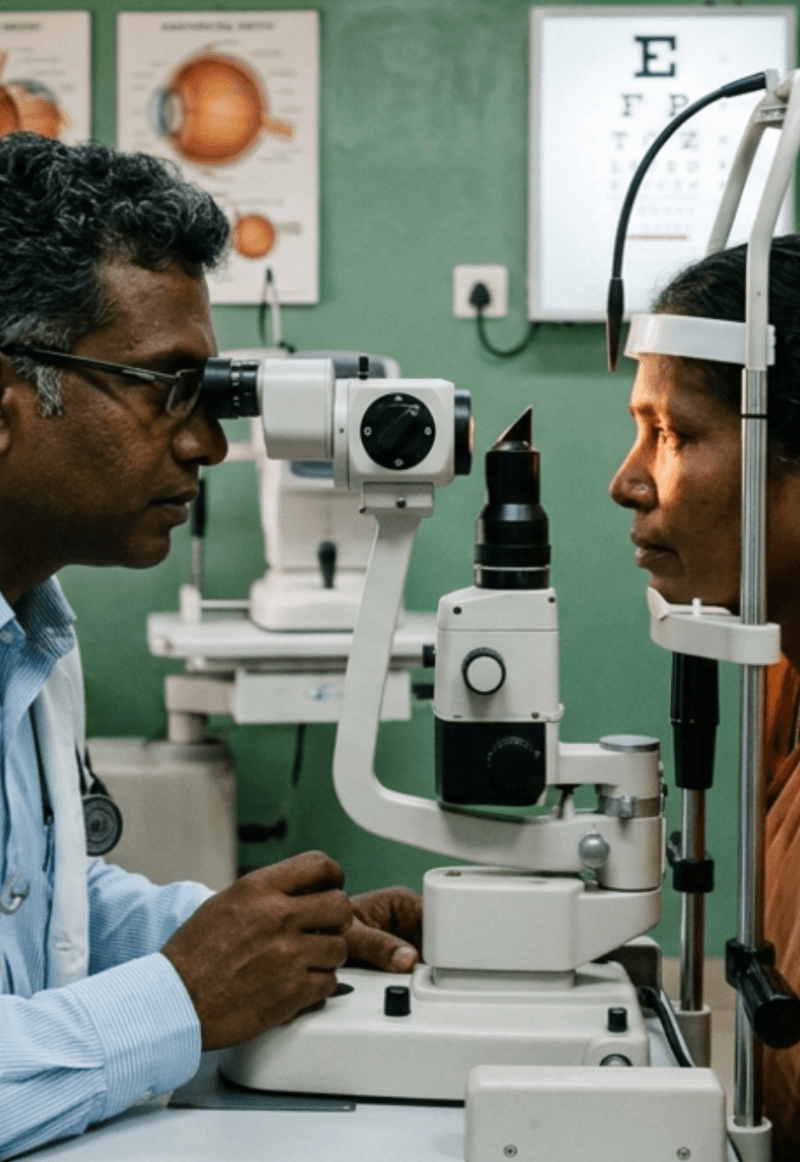
Glaucoma is confirmed with detailed eye examination, often over more than one visit. Tests may include:
Eye Pressure Check
Measures the pressure inside the eye
Drainage Angle Examination
Checks whether the drainage angle is open
Optic Nerve Scan (OCT)
Measures the nerve fibre layer
Visual Field Test
Maps your side vision
2. Treatment
The goal is to lower eye pressure and protect the optic nerve. Lost vision cannot be restored.
When is treatment needed?
As soon as glaucoma is confirmed, or when eye pressure or the optic nerve puts the eye at risk. A sudden angle-closure attack is an emergency.
Without surgery:
Eye drops are the first treatment for most people. They are used daily, often for life. Correct technique and regular use matter.
Laser options:
Laser iridotomy: Makes a tiny opening in the iris to open a blocked drainage angle.
Surgical Options:
Micro-incision glaucoma surgery (MIGS): Less invasive way of lowering intraocular pressure.
Trabeculectomy: Creates a new drainage channel for the eye fluid.
Drainage implants: Create an new drainage pathway through an implant.
You may still need drops after laser or surgery.
Got a diagnosis? Ensure you’re on the right track with a second opinion:
3. Recovery and Post-Op Care
- Use drops exactly as prescribed
- Wear the eye shield while sleeping
- Do not rub or press the eye
- Keep water and soap out of the eye
- Wear sunglasses outdoors
- Avoid heavy lifting and swimming for 2 to 4 weeks
- Reading, TV and light activity are fine
- Early follow-up visits are frequent
- Follow up schedule is individualised based on the recovery but it is usually week 1, week 3, week 5
- Glaucoma needs lifelong follow-up, usually every 3 to 6 months as advised. Use your drops as prescribed even when your vision feels normal.
Call us or visit immediately for severe eye pain with redness, a sudden drop in vision, or halos with nausea. After surgery, call for increasing pain, redness or a drop in vision.
Got questions about your recovery?
Planning Your Care
Comprehensive care, personalized for you. Know what is covered, what it costs and what to bring.
Insurance & Schemes
- EHS
- CGHS
- Cashless insurance (Check list)
- Institutional empanelments (Check list)
- Aarogyasri: not covered
What will it cost?
Consultation fee:
Surgery:
Laser and treatment depend on the procedure
Before your visit
Bring:
- Current/previous medical records & drops
- Photo ID, Insurance or scheme card
- Family glaucoma history and an accompanying relative/friend
Plan for: 2-3 hours; Some tests may need a 2nd visit
Unsure where to start? We’re here to help!
Frequently Asked Questions
Can glaucoma be cured?
No, but it can be controlled. Treatment protects the vision you have.
Can lost vision come back?
No. That is why early detection matters.
I have no symptoms. Do I still need a check?
Yes. Early glaucoma usually has no symptoms. Get checked from 40, or earlier with a family history or other risk.
Is high eye pressure the same as glaucoma?
No. Some people have high pressure with a healthy nerve, and some have glaucoma with normal pressure. Your doctor assesses the nerve and your side vision.
Will I need drops for life?
Most people do. Laser or surgery can sometimes reduce the need.
What if I stop the drops when I feel fine?
Pressure can rise without any symptom, and damage continues.
Is glaucoma hereditary?
The risk is higher if a parent or sibling has it. Ask close relatives to get checked.
What is glaucoma?
Glaucoma damages the optic nerve and can cause permanent vision loss. It often has no early symptoms, so regular eye examinations are important.
Does glaucoma mean I will become blind?
No. With appropriate treatment and follow-up, many people keep useful vision throughout their lives.
What is normal eye pressure?
Eye pressure is commonly around 10–21 mmHg, but a safe target varies from person to person. Your doctor sets your target based on your optic nerve, test results and risk.
Can I have glaucoma even if my eye pressure is normal?
Yes. Glaucoma can damage the optic nerve even when eye pressure is within the usual range. Diagnosis also depends on the optic nerve and visual field tests.
Why do I need visual field tests?
They check your side vision, which glaucoma can damage. Repeating the tests helps detect changes over time.
Will I need glaucoma eye drops for life?
Many people need long-term treatment. Laser or surgery may reduce the need for drops in some cases; follow your glaucoma specialist’s advice.
Can I stop my drops if my eye pressure is normal?
No, not without your doctor’s advice. Your pressure may be normal because the drops are working.
Glaucoma in the family or Over 40?
Book an eye pressure and optic nerve check at Habsiguda or Chanda Nagar.